How we teach
Here is exactly how we teach your child.
From the first assessment to the work they take home each week, the tutor is constantly checking what your child understands, teaching what they need next, and adjusting the plan when something is not secure.
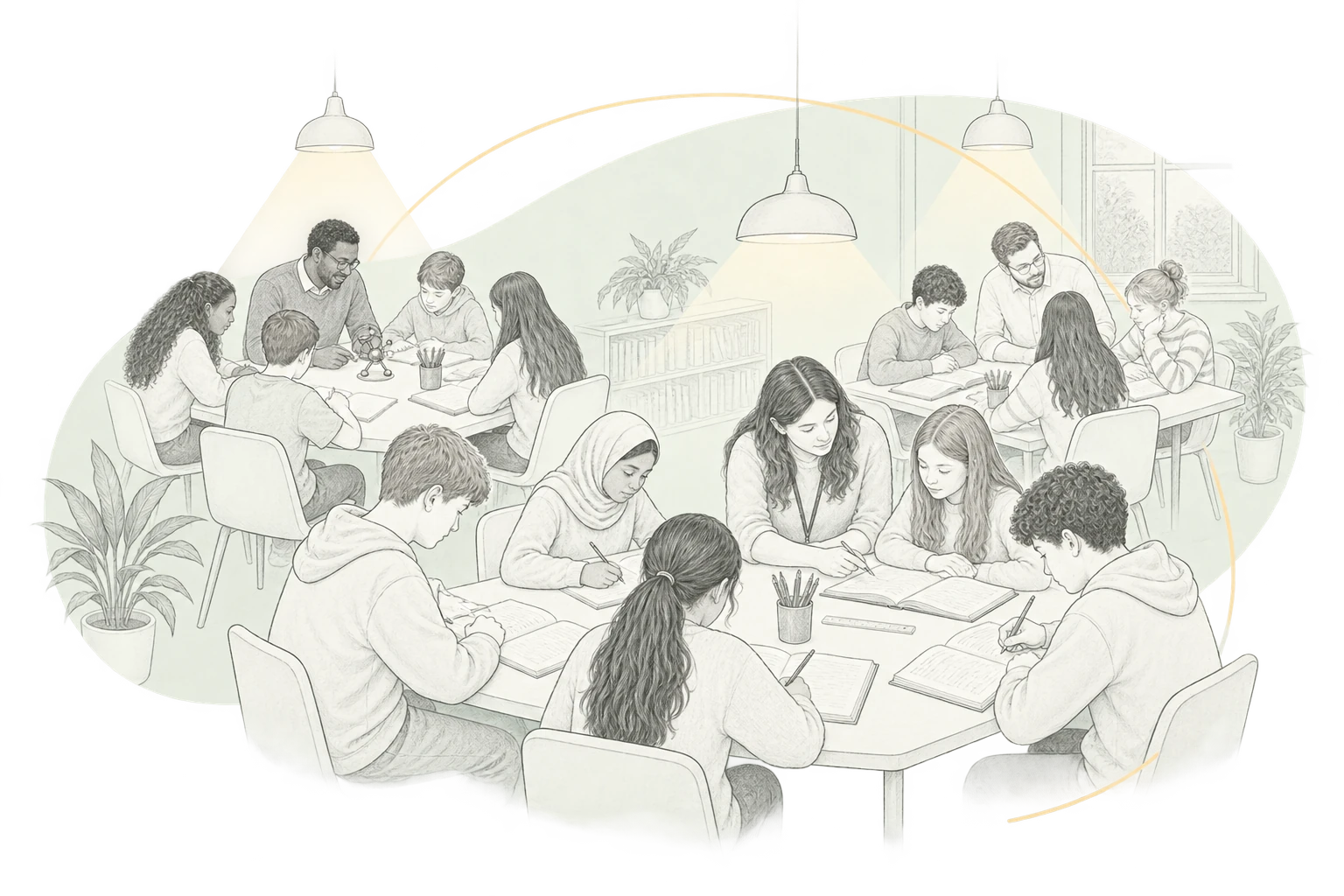
Before the first session
We start by working out what your child needs help with.
Nothing is decided before we have met them. The free assessment tells us where they are — not where their year group says they should be — and we read it alongside their school reports and results. That gives the tutor a starting plan.
At the start of the session
Last week's homework is reviewed and corrected with them.
Together they look at what went wrong, and whether an error was a slip or something the pupil has not understood yet.
−2x = 6 ✓
x = 3 x = −3watch the sign
A slip gets a correction and they carry on. Your child knew the method and dropped a sign.
A misconception pauses the work. If they divided 6 by −2 and kept the sign because they do not yet know why the sign changes, more practice will not fix it — so the concept is taught again, differently, before they go any further with it.
The pupil then corrects the mistake themselves.
The teaching
New work is taught, practised and checked in the session.
The tutor teaches the next piece of work, then the pupil practises it while support is still there. Their work is marked during the session so mistakes can be dealt with before they become next week’s problem.
5x − 2x = 14 + 7 −2x and +7, both sides
3x = 21
x = 7 ✓
With never more than five students, the tutor has time to teach a concept to one child, set them practising, and come back to check what happened — before the student continues practising the mistake.
Before they leave
The next homework is taught before it goes home.
Homework comes from work the pupil has already been taught. Before they leave, the tutor makes sure they understand what they are being asked to do.
3(x + 4) = 27
3x + 12 = 27
3x = 15 → x = 5 ✓
Now these four
4(x + 2) = 20 · 2(x − 3) = 8 …
At home, the job is practice — not teaching.
You should not need to teach the lesson for us.
Before the session ends
The next session starts with a record of the last one.
Pupils normally keep the same tutor. At the end of each session, the tutor records what was covered, what was secure, what needs revisiting and what comes next.
If another tutor needs to teach the pupil, they can read that record before the session rather than starting without context.
- Covered
- Linear equations — unknown on both sides
- Secure
- Collecting terms; one-step rearrangement
- Watch
- Sign changes when dividing by a negative
- Set
- Brackets, 4 questions — model worked in session
- Next
- Re-check signs, then move to brackets both sides
When the evidence says something else
The programme changes when it should.
What the diary triggers
A child keeps losing marks on equations. The tutor looks at how they are losing them, and it is not equations at all — it is that they cannot confidently handle a negative.
So we stop, and deal with negatives — rather than carrying on through the workbook because that is what comes next.
In Maths, a chapter is checked before we call it secure. Each chapter ends with a test: 80% or above means it is secure enough to move on; below that, we revisit the questions that caused difficulty and check again.
Two hours
What happens in the two hours.
The examples are maths because the marking is easy to see; English and science follow the same steps.
Want to see where your child would start?
Book a free assessment at our Tooting centre. We mark the work afterwards and talk you through what we found.